

Your body changes, so should your workout
Women going through menopause notice it: their bodies react differently to exercise than before. Weight that used to be easy to lose is now stubborn. Muscles feel weaker, energy fluctuates, and recovery after exercise takes longer. This is no coincidence – it's hormone biology.
And yet, this is precisely when strength training makes the most difference. Not despite menopause, but precisely because of what happens to your body during menopause.
What changes hormonally
During menopause, estrogen levels drop. This hormone plays a direct role in maintaining muscle mass and bone density. Less estrogen means your body loses muscle mass faster – a process called sarcopenia – and bones become more fragile.
At the same time, insulin resistance increases and cortisol (stress hormone) is often elevated. This makes it harder to lose fat and easier to store it – especially as visceral fat around the abdomen.
Strength training addresses all these points directly.
Why strength training is the best intervention
Research consistently shows that resistance training in women over 40 and 50 leads to better body composition, higher bone density, improved insulin sensitivity, more energy, and better sleep quality. These are all things that come under pressure during menopause.
Muscles are also metabolically active: the more muscle mass you have, the more you burn at rest. This makes strength training more effective for sustainable weight management than cardio alone.
How to start – even if you've never done this before
You don't have to lift heavy or go to a gym to get started. Your own body weight is an excellent start. Squats, lunges, push-ups, hip hinges – these exercises train multiple muscle groups at once and can be done at home.
Aim for 2 to 3 sessions per week of 30 to 45 minutes. That's enough to notice a difference in strength, posture, and energy within weeks. Building up is key: start light, gradually increase.
Protein: the foundation of every workout
Strength training is only effective if your body has enough building blocks to repair and build muscles. Proteins are those building blocks. Without enough protein, training leads to less recovery, more muscle soreness, and less progress.
Women in menopause generally need more protein than they think – especially if they are training. The Killerbody Mealshakes offer a practical solution: a complete amino acid profile in one shake, quick to prepare, and also pleasant to consume if your appetite fluctuates due to hormonal changes.
The 8 Weeks Killerbody Challenge: your starting point
Do you want to start immediately with a complete program that can be followed at home or in the gym? The 8 Weeks Killerbody Challenge offers a step-by-step training plan specially designed for women. Weekly build-up, clear exercises, and a supportive community.
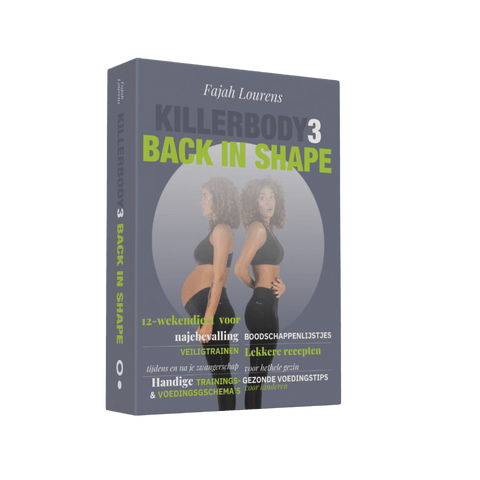
Combine this with the Back in Shape nutrition program for an approach that supports both your training and your hormone balance. Together, they form the most complete package for women who want to get stronger during menopause.
Training with the cycle – even during menopause
If you are still menstruating (perimenopause), it's smart to align your training with your cycle. In the follicular phase and around ovulation, you can train heavier and recover faster. In the luteal phase, you can take it easier – recovery work, yoga, or light strength training work better then.
In postmenopause, your cycle is gone, but consistency remains key: regular training, even if energy fluctuates, is more important than intensity peaks.
Conclusion: start now, not later
There is no better time than now to start strength training. Every week you wait, you lose some muscle and bone mass. Every week you train, you build it up – and lay the foundation for a stronger, more energetic, and healthier body in the years to come.
Step by step, session by session.